Frequently Asked Questions
Do fluffy corgis require more grooming?
Yes, they do require a little extra grooming due to their longer fur, but generally shed less than a standard coat.
Watch for little mats behind their ears and elbows. I also like to trim their feet every 4-6 weeks to keep them neat and clean.
Recommended grooming supplies:
A slicker brush & comb
Dog / Pet Forced Air Dryer
Mane & Tail Pet Me Shampoo and Conditioning Spray or your favorite dog shampoo & ShowSheen
Scissors
Crate Training
Crate training is an important part of training a pup. Not only does it help with house training, but traveling and vet visits too.
What do all of the letters in health testing mean?
Degenerative Myelopathy (DM) – “Degenerative myelopathy is often abbreviated as DM and is a disease that affects the white matter of the spinal cord. With DM, this part of the spinal cord starts to break down, or degenerate, and results in weakness of the hind limbs that eventually progresses to paralysis.”
Von Willebrand Disease (VWD) – “Von Willebrand’s disease (vWD) is the most common inherited bleeding disorder of both humans and dogs. It is caused by a deficiency in the amount of a specific protein needed to help platelets (the blood cells used in clotting) stick together and form clots to seal broken blood vessels.”
Exercised Induced Collapse (EIC) – Exercise-induced collapse is a genetic neuromuscular disorder characterized by muscle weakness, lack of coordination, and life-threatening collapse after intense exercise in otherwise apparently healthy dogs.”
**Please note: most Corgis do carry at least ONE copy of one of these listed, however, they are not AT RISK.
Fun
Corgis love to have fun! Here are some corgi tested (and approved!) toys.
Tot’s #1 recommendation is a broom. She’s had the same broom for 7+ years and plays with it every day.
Chip’s #1 recommendation is Matt’s shoe, but an interactive dog ball like this one on Amazon is a close second.
Tater’s #1 recommendation is any toy with stuffing and a squeaker even better if there are 8 squeakers. He will gut it and de- squeak it in less than 2 minutes.
Ida’s #1 recommendation is what we call a stick string but is usually called a flirt pole. It will save your feet and ankles during the bitey puppy phase.
Spud’s #1 recommendation is also Matt’s shoe, but he also enjoys Matt’s clothes or belt in a pinch. He enjoys shredding paper towel rolls. Simple and fun!
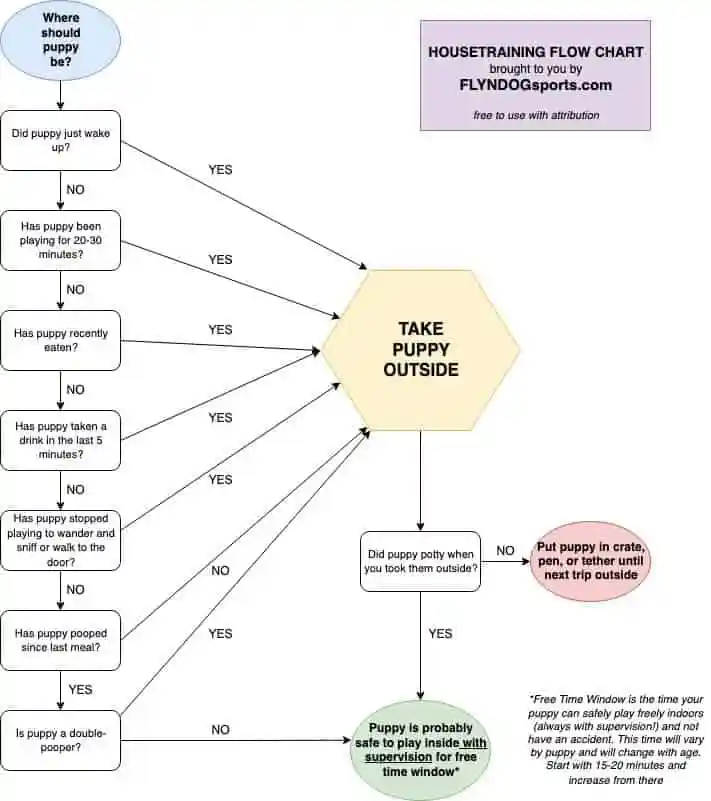
How do I know when my puppy needs to go out to potty?
Puppies generally gain control of their bladders around 16 – 24 weeks. The general rule of thumb is they can hold their pee for 1 hour per month of age.
Our puppies begin house training at 4 weeks using a litter box with pine pellets. This takes advantage of their natural instinct to not potty where they sleep and makes for an easier transition to pottying outside when they go to their new homes. The flow chart below is a great resource for identifying when your puppy should go out.
What kind of food is my puppy eating?
Puppies start with Royal Canin Mother and Babydog Wet Food around 3 weeks old before transitioning to Hill’s Science Diet Salmon Dry Puppy Food and various flavors of wet food. Each puppy will be sent home with a small bag of dry food to use as they transition to their new homes preferred food.
More questions coming soon…
More info coming soon….